
Dental Implants in O’Fallon & St. Peters, MO
Dental implants are an effective and natural solution to missing teeth. They also look, feel, and function like your own teeth!
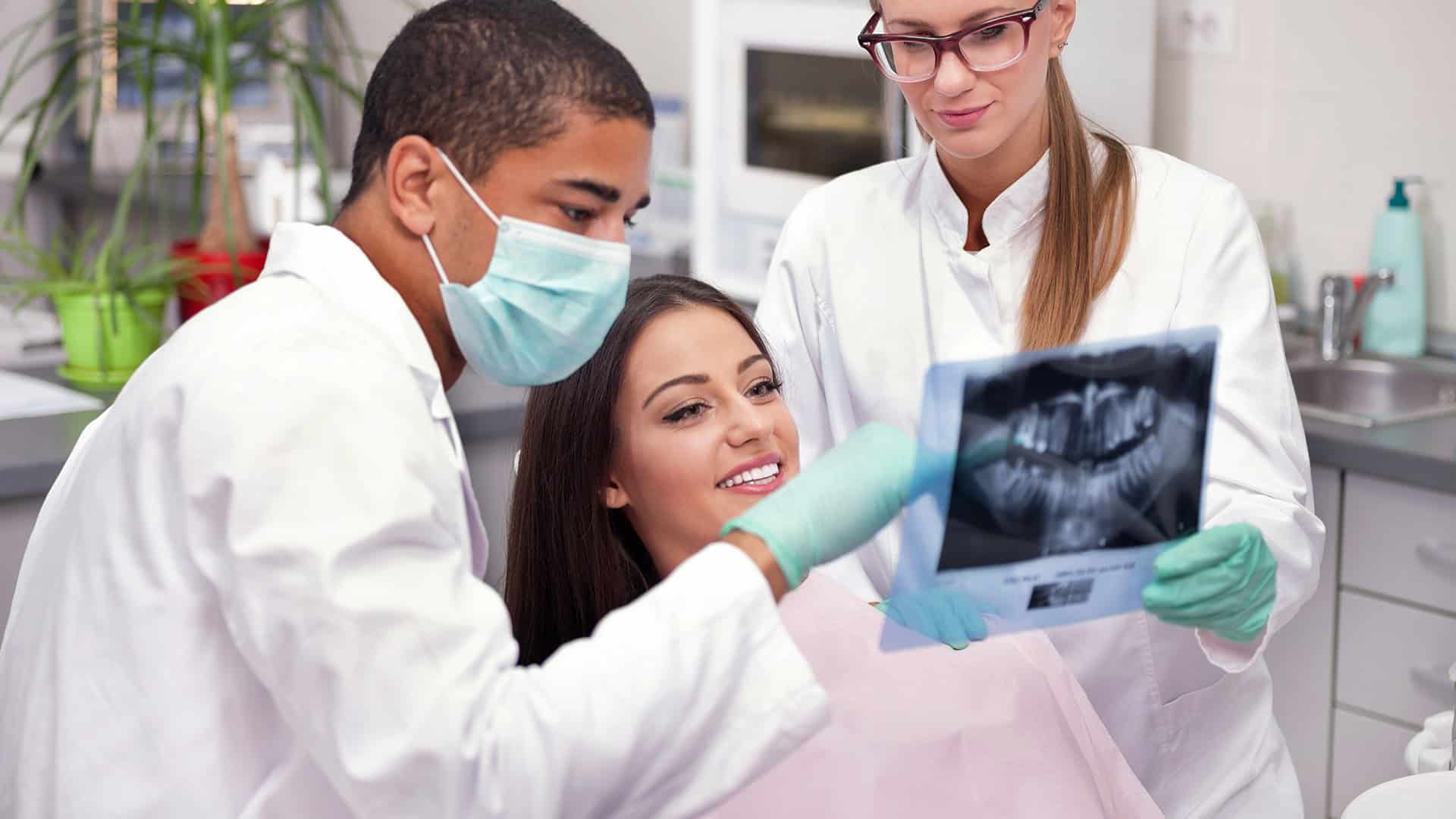
Benefits of Dental Implants
Dental Implants have several benefits, including:
- Prevents bone loss and gum recession
- Leaves the surrounding teeth unaltered and untouched
- Allows you to eat and speak comfortably like before
- You can clean implants like natural teeth
- Allows you to preserve your natural facial structure
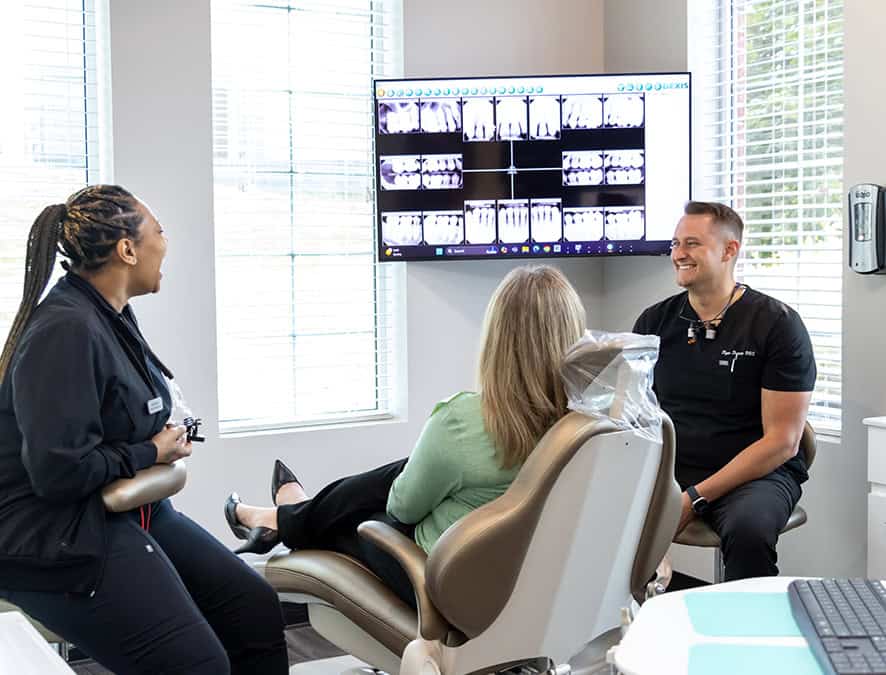
Value of Dental Implants
Dental implants are often your best long-term solution for replacing missing teeth because they bond with your healthy bone, providing a sturdy base for a dental crown, bridge, or denture. Together, all three components function just like your natural tooth. Dental implants are made to be a lifelong solution so you can start living the life you want!
Implants are placed and restored at both of our offices — O’Fallon and St. Peters, MO. Dr. Mazen Sultan completed a General Practice Residency and an Implant Fellowship, where he trained to both place and restore dental implants.
Still comparing your options? Implants are one way to replace a missing tooth — ask our team about crowns and dentures and partials as well. See payment and financing options, or request a complimentary consultation for a recommendation.
Dental Implants FAQs
Most adults who are missing a tooth are candidates for an implant, but a few things have to be in place first. At your consultation we look at:
- Jawbone support. An implant needs enough bone to anchor into. Bone begins to shrink after a tooth is lost, so the longer a gap has been there, the more likely some preparatory treatment is needed.
- Gum health. Active gum disease is treated before an implant is placed, because the same infection that damages gums around teeth can affect an implant.
- General health and medications. Conditions such as uncontrolled diabetes, and some medications, can slow healing. This rarely rules an implant out, but it does change how we plan it.
- Smoking. Smoking raises the risk of an implant failing to heal properly. We will talk honestly with you about what that means for your case.
- Grinding and clenching. Heavy grinding puts extra force on an implant. If you grind, a night guard is often part of the plan.
Implants are generally placed once jaw growth is complete, so they are usually an adult treatment. If an implant is not the right fit, we will tell you and walk through the alternatives below.
A dental implant is not a single appointment. It is a staged treatment, and most of the time in between is healing rather than chair time.
- Consultation and imaging. We examine the area, take imaging to assess bone, and go over your options and an estimate.
- Preparing the site, if needed. Some patients need a tooth removed or the bone built up before an implant can be placed. Not everyone needs this step.
- Placing the implant. The implant post is placed into the jawbone. Sedation options are available if you would be more comfortable with them.
- Healing. The bone grows around and fuses to the implant, a process called osseointegration. This commonly takes several months, and it is the part that cannot be rushed. A temporary tooth can often be worn during this time.
- Attaching your new tooth. Once the implant is stable, a connector and your final crown, bridge or denture are fitted and matched to your other teeth.
Timelines vary a great deal depending on whether you need preparatory treatment and how quickly you heal. Your dentist will give you a timeline for your own case rather than a standard one.
There is no single price for a dental implant, because "an implant" can mean one tooth or a full arch. The things that move the number most are:
- How many teeth you are replacing, and whether each one gets its own implant or several are supported by fewer implants
- Whether you need an extraction, bone grafting or other preparation first
- The type of restoration on top — a single crown, a bridge, or an implant-supported denture
- Imaging, and whether you choose sedation
- What your dental insurance covers, which differs widely between plans
We will give you a written estimate before you commit to treatment, so you are not guessing. See payment and financing options for the ways patients spread out the cost.
An implant is not the only way to replace a missing tooth, and it is not automatically the right one. Here is an honest comparison.
Dental implant
Stands on its own in the jawbone, so the teeth either side are left untouched. It also puts pressure back into the bone, which helps slow the bone loss that follows a missing tooth. It is the longest treatment and usually the largest upfront cost.
Bridge
A crowned replacement tooth anchored to the teeth on either side. It is faster and usually costs less upfront, but it means reshaping two healthy teeth, and it does not stop bone loss underneath the gap.
Denture or partial
Dentures and partials are removable and replace several teeth at once. They are the least invasive and most affordable option, and they can be relined or remade as your mouth changes. Some patients find them less stable than fixed options, which is why implant-supported dentures exist as a middle ground.
Leaving the gap
Worth naming, because it is a real choice people make. Over time neighboring teeth tend to drift into the space and the bone in that area shrinks, which can make treatment more involved later.
An implant cannot get a cavity, but the gum and bone around it can still become infected, and that is the most common reason implants fail years later. Caring for one is much like caring for a natural tooth: brush twice a day, clean between your teeth daily, and keep up with regular exams and cleanings so we can check the implant and the gum around it. Wear your night guard if you have been given one, and avoid using your teeth to open things.
Your first visit is about information, not commitment. We will examine the area and take the imaging needed to see the bone, talk through whether an implant is a good fit for you, explain the alternatives, and give you a written estimate and a timeline. You will also meet the dentist who would carry out your treatment.
Dr. Mazen Sultan completed a General Practice Residency at the University of Louisville and an Implant Fellowship, where he trained to both place and restore dental implants. You can see all of our dentists on the doctors and team page.
We see implant patients at both our O’Fallon and St. Peters offices. Request a complimentary consultation and we will take it from there.
Contact Us
Complete the form below for a consultation. A team member will contact you as soon as possible upon receiving it.